When Your Business Should Upgrade To LED Lighting
August 30, 2026
Why Dedicated Circuits Are Important For Modern Appliances | Toronto & GTA
August 30, 2026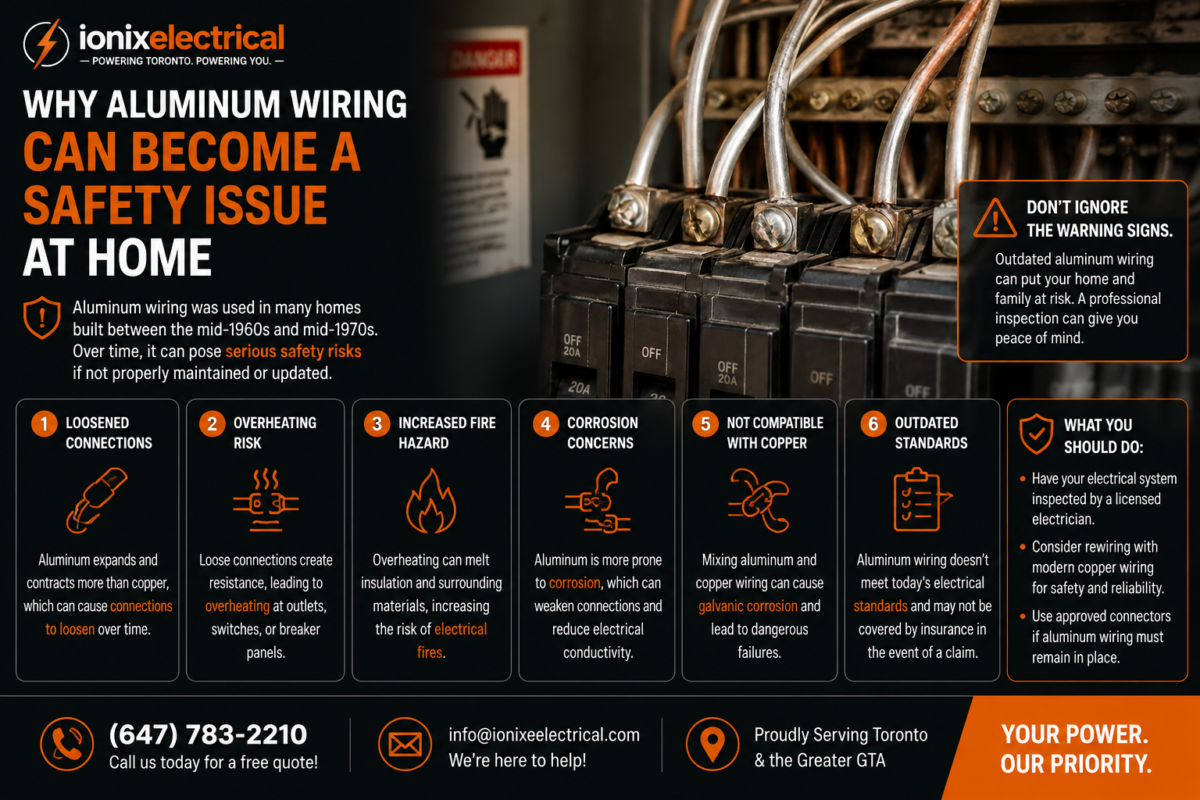
Why Aluminum Wiring Can Become A Safety Issue At Home
So, why does aluminum wiring end up being a safety issue? The short version: it can work loose, overheat, and form risky connections as the years go by. The danger really ramps up in older homes and buildings where aluminum was commonly used for outlets, switches, and lights.
If you think there is aluminum wiring in your place, getting a professional inspection is just smart. A good electrician will check the wiring, test those connections, and help you figure out the safest way forward.
At Ionix Electrical, our licensed electricians help homeowners across North York, Scarborough, Etobicoke, Mississauga, Brampton, Vaughan, Markham, Richmond Hill and the wider GTA identify aluminum wiring risks and provide safe, code-compliant solutions. We work to the Ontario Electrical Code and ESA standards so you stay protected.
What Aluminum Wiring Is And Where It’s Commonly Found
Aluminum wiring is just what it sounds like — wires made from aluminum instead of copper. Back in the mid-1960s through the early 1970s, copper got pricey, so builders switched to aluminum for a while. You will still see it in some service work today.
Homes and buildings most likely to have it include those built during the 1960s and 1970s, especially if nobody has ever done a major electrical update. Sometimes it pops up in older commercial spaces, additions, or remodels where someone mixed aluminum and copper parts.
Branch circuits versus larger service conductors: the real trouble is usually the smaller branch circuits feeding your outlets, switches, and lights. Those connections get a workout every day. Bigger service conductors can be fine if installed correctly, but problems often start where aluminum appears in circuits or at connection points that were never built for it.
How Heat, Expansion, And Loose Connections Create Risk
Aluminum just does not behave like copper. It expands and contracts more with heat, and that movement can mess with terminations over time. Once a connection loosens, resistance increases, heat builds up, and things can spiral quickly.
Thermal Expansion And Contraction At Terminations
Every time you use electricity, the wire heats up a bit. Aluminum shifts more than copper as it warms and cools, so screws and terminals can gradually lose their grip.
A connection might look totally fine from the outside but still have issues hidden inside the device or panel. Out in the field, loose terminations are a top reason aluminum wiring gets dangerous.
Oxidation And Increased Electrical Resistance
Aluminum forms an oxide layer on its surface, and that stuff does not conduct electricity well. If you do not handle it right, resistance at those connection points goes up.
More resistance means more heat. That extra heat can damage outlets, switches, and breakers. Over time, you might face repeated troubleshooting calls, broken devices, or even a fire hazard.
Why Devices And Connectors Matter
The devices you use are just as important as the wire itself. Standard outlets and switches might not grip aluminum safely unless they are rated for it or installed with approved methods.
A loose or mismatched device can create tiny arcs under load. That is why electricians pay close attention to outlet upgrades, switch replacements, lighting installs, and panel work when aluminum wiring is involved. Our upgrades and repairs team handles these connections safely every day.
Warning Signs Property Owners Shouldn’t Ignore
Aluminum wiring usually gives you clues before things get bad. Warm outlets, flickering lights, odd smells, or damaged finishes — do not shrug those off.
Warm Outlets, Switches, Or Panels
If you touch an outlet, switch, or panel cover and it feels warm, that is not normal. Heat usually means something is loose, overloaded, or failing at the connection.
You might notice it after running a space heater or a big kitchen appliance. If the warmth keeps coming back, do not wait — get it checked.
Flickering Lights And Intermittent Power
Lights that flicker, dim, or cut out for no clear reason? That often points to a loose connection. Power that comes and goes at one outlet or in one room can mean the circuit is struggling.
These issues pop up in homes with aging wiring, but also in businesses that have outgrown their original electrical setup. Breakers that keep tripping or random dead outlets should not be ignored.
Burning Odors, Buzzing, Or Discoloration
Smelling something burning, hearing buzzing, or spotting dark marks around devices? That is a sign the wire or terminal is overheating. Discoloration on a faceplate or around a breaker is a big red flag.
If you see or smell any of this, stop using that circuit and call an electrician. Do not wait — small issues can turn into big, expensive problems if you let them go.
Common Problem Areas In Residential And Commercial Systems
Certain spots in the electrical system fail more often when aluminum wiring is in play. Trouble usually pops up where the wire gets bent, clamped, or hooked to a device.
Receptacles, Switches, And Light Fixtures
Outlets, wall switches, and light fixtures are big trouble spots. They get used, replaced, and fiddled with over the years. Each time someone changes a device, the connection can get disturbed — especially if they skip the right steps.
We run into damage at these points a lot during service calls for lighting upgrades, ceiling fans, or outlet and switch work.
Panel Connections And Circuit Breakers
Breaker and panel terminations can loosen too, especially in older gear or panels that have been through lots of heat cycles. If nobody has checked the system in years, small problems inside the panel can go unnoticed.
That is a big reason panel upgrades and safety inspections matter in older places. A tired panel, overloaded or corroded, just makes aluminum wiring risks worse.
Additions, Remodels, And Mixed-Metal Repairs
Problems often show up where old and new wiring meet. A remodel might add copper wiring to an older aluminum branch circuit without proper connectors, and that creates a weak link.
This is common in additions, kitchen updates, EV charger installs, generator hookups, and other electrical projects. If your system has been patched together over the years, mixed-metal repairs definitely deserve a careful look.
Safer Repair And Upgrade Options
There is more than one way to cut risk, and the best fix depends on your system’s age, the wiring’s condition, and how much of the place is affected. A licensed electrician can help you pick the safest route without tearing out more than you need.
Approved Connector Methods
Some aluminum wiring gets safer with approved repair methods — special connectors, pigtailing with the right materials, or swapping devices for ones designed for aluminum. These fixes help control heat and keep things tight.
The trick is using products and steps that are actually approved for that job. Quick fixes or mismatched connectors can leave you right back where you started.
When Partial Rewiring Makes Sense
Partial rewiring can be a smart move if just a few circuits or rooms have issues. If the rest of your system is solid, targeted upgrades can take care of the worst spots without gutting the whole place.
It is a practical option for homes and businesses that cannot afford a lot of downtime. Makes sense if you are already updating lighting, outlets, or doing a small panel job.
When Full Wiring Improvements Or Panel Upgrades Are Worth It
Sometimes a full upgrade is just the way to go — like when there is widespread damage, repeated failures, or lots of sketchy repairs. If your panel is outdated or too small, upgrading that might be part of the fix.
For older homes across North York, Scarborough, Etobicoke, Mississauga, Brampton, Vaughan, Markham or Richmond Hill, a bigger upgrade can mean better safety, fewer headaches, and room for future needs. That is a big deal if you want smart home features, efficient lighting, or bigger appliances. We combine these upgrades with ESA inspections for complete peace of mind.
When To Schedule A Professional Electrical Inspection
If you think you have aluminum wiring, book a professional inspection. An experienced electrician will spot problem circuits, test connections, and figure out if the risk is just local or system-wide.
Before Buying, Selling, Or Renovating A Property
Schedule an inspection before buying a place with old wiring, before listing your home, or before starting a remodel. You will get a clearer idea of what needs fixing and avoid nasty surprises later.
It is especially helpful if you are planning kitchen work, lighting installs, or anything that will open walls and mess with wiring. A little checking up front can save you a lot of grief.
After Repeated Troubleshooting Issues
If you have replaced outlets, switches, or breakers and the same thing keeps happening, the wiring itself might be the real issue. When troubleshooting goes in circles, it is time to test the circuit.
At that point, stop guessing. A careful inspection protects both your safety and your wallet.
Call Ionix Electrical at (647) 783-2210 or email info@ionixelectrical.com for a professional aluminum wiring assessment and safe upgrade plan.
Frequently Asked Questions
When did aluminum wiring stop being commonly installed in homes?
Most builders used aluminum wiring for residential branch circuits from the mid-1960s to the early 1970s. By the mid-1970s, concerns about failures and overheating led to changes in code and building practice.
Is it risky to buy a house that has aluminum wiring?
Not every home with aluminum wiring is a ticking time bomb, but you should definitely get it checked. If it has been properly fixed up and everything is in good shape, the risk drops a lot compared to an untouched old system.
What makes aluminum wiring more likely to cause electrical problems over time?
Aluminum expands and contracts more than copper, which loosens connections. Oxidation also increases resistance, creating more heat at outlets, switches, and panel points.
Are there safe ways to remediate aluminum wiring without replacing it all?
Yes — there are approved repair methods that lower risk without a full rewire. Special connectors, proper pigtailing, and devices rated for aluminum are the usual go-tos.
How much does it typically cost to replace aluminum wiring with copper?
Costs can swing a lot depending on the size of your place, how easy it is to reach the wiring, and how much needs fixing. A small repair might be pretty manageable, but a whole-house rewire is a big investment.
What do CPSC recommendations say about addressing aluminum wiring in older homes?
The CPSC has always stressed that older aluminum branch-circuit wiring needs a proper check-up and fixes using approved methods, since poor connections can really ramp up fire risks. Get a qualified electrician to take a look and stick with trusted remediation options instead of just hoping for the best.
Ready to protect your home from aluminum wiring risks?
Ionix Electrical provides professional inspections, approved repair methods, partial rewiring, full panel upgrades, and complete ESA-compliant electrical work across Toronto and the GTA. We help homeowners identify issues early and create a safe, long-term solution.
Call (647) 783-2210 or email info@ionixelectrical.com today.
Helpful Resources
- Electrical Safety Authority (ESA) – Official Ontario guidance on electrical safety and inspections.
- Save on Energy / IESO – Energy-efficiency programs that support related home upgrades.
Related reading on our blog:
- How to Upgrade Electrical Panel Safely for Homes and Businesses
- Electrical Panel Upgrade – 7 Critical Benefits for Toronto Homes
- Electrical Wiring in Older Homes – 7 Critical Risks
- Emergency Electrician – 7 Critical Signs You Need to Call One in Toronto
- Choosing a Licensed Electrical Contractor – 5 Critical Steps
- Professional Electricians in Toronto