How To Prepare Your Electrical System For Holiday Lighting Safely
August 30, 2026
What To Know Before Adding A Hot Tub Circuit At Home
August 30, 2026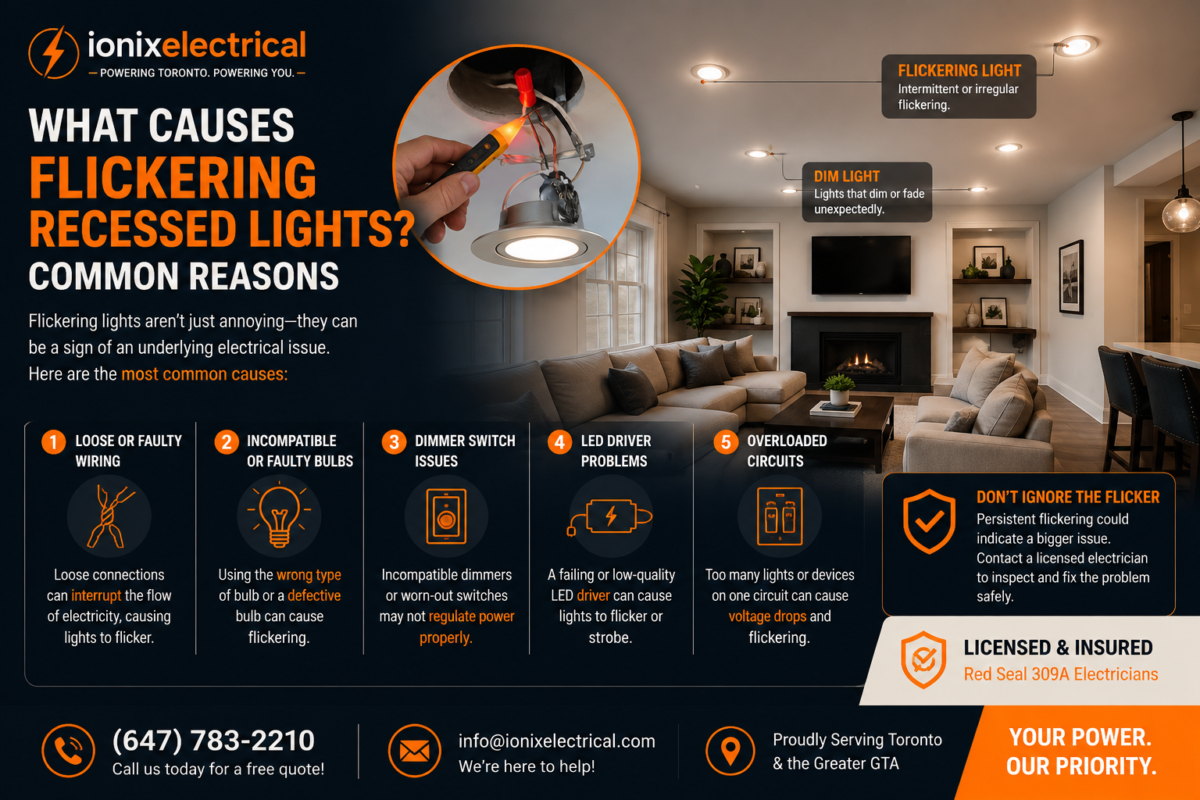
What Causes Flickering Recessed Lights? Common Reasons
Flickering recessed lights usually point to something simple — a loose bulb, a dimmer mismatch or a tired LED driver. Sometimes, though, the flicker signals loose wiring, voltage swings or an overheating fixture that should not be ignored.
If you are trying to figure out what causes flickering recessed lights, start with the basics. If the flicker keeps returning, pay attention. Steady lights should stay steady. When they do not, your home or business is trying to get your attention.
At Ionix Electrical, our licensed electricians serve Toronto and the Greater Toronto Area — North York, Scarborough, Etobicoke, Mississauga, Brampton, Vaughan, Markham, Richmond Hill and beyond. We work to the Ontario Electrical Code and ESA standards. If the problem persists, we can check the fixture, switch and circuit before a small annoyance turns into a larger issue.
What Flickering Usually Means
Not all flicker is the same. Some lights blink once at startup; others dim or pulse while you are in the room.
Normal Behavior Vs. A Real Electrical Problem
A quick flash when you flip the switch is fairly normal for some LED recessed lights, especially at power-up. But if the light keeps changing brightness, you may be dealing with a loose connection, a bad bulb or a circuit issue. If it worsens, do not ignore it.
Why Recessed Fixtures Can Be More Sensitive Than Other Lights
Recessed lights sit inside the ceiling, so heat builds up faster than with open fixtures. That extra heat affects bulbs, drivers and internal components.
They are also frequently paired with dimmers, insulation and tight wiring spaces. Across Toronto and the GTA, this combination means small electrical problems often show up first as flicker.
Most Common Trouble Sources
Most flickering starts with something basic — something loose, mismatched or simply worn out. These are the first things we check on service calls because they are so common.
Loose Bulbs Or Poor Socket Contact
If a bulb is not seated properly, it can flicker every time the air moves or the fixture heats up. A weak socket produces the same effect even with a good bulb.
Gently tighten the bulb first. If that solves it, the problem was simple. If not, the socket or the entire fixture may need attention. Professional lighting services can diagnose and correct these issues safely.
Incompatible LED Bulbs And Dimmer Switches
LED recessed lights and older dimmers often do not work well together. This mismatch is one of the most frequent causes of flickering after LED upgrades.
You may notice a faint buzz or pulsing at low settings. Installing a compatible LED-rated dimmer usually resolves the problem. This is a common upgrade we perform during upgrades and repairs.
Overheating Inside The Housing
When the housing gets too hot, the fixture may dim, blink or shut off temporarily. This is more common in older cans or locations with poor ventilation.
Kitchens, hallways and bathrooms where lights stay on for long periods are frequent problem spots. If performance improves after the fixture cools, heat is likely a contributing factor.
Aging Drivers, Trims Or Internal Components
LED recessed lights rely on drivers and other components that wear out over time. Once they begin to fail, flicker appears even with a new bulb.
A worn trim or loose internal connection can produce the same result. If only one fixture flickers while others remain steady, aging internal parts are a strong possibility.
Wiring And Power Supply Issues
If swapping bulbs does not help, the wiring or power supply may be the real cause. These problems matter more because they can affect the entire circuit.
Loose Connections In The Fixture Or Junction Box
A loose wire nut, weak splice or shaky connection can interrupt power for a fraction of a second and cause a recessed light to flicker. This can occur inside the can, at the junction box or behind the switch.
Problems like this worsen with vibration, heat or age. Professional wiring services are the safest way to locate and correct them before they become larger repairs.
Voltage Fluctuations From The Circuit
When voltage rises and falls, lights can flicker. You will notice it more when large appliances start — microwaves, HVAC systems or refrigerators.
This is common in busy homes and commercial spaces with high electrical load. Sometimes it points to a utility, service or wiring issue that needs investigation.
Overloaded Circuits And Shared Loads
Too many lights or devices on one circuit create instability. Recessed lights may flicker when the circuit is under strain, especially if other equipment shares the same line.
Adding outlets, lighting or smart devices without checking system capacity often makes the problem worse. Understanding circuit limits is essential for long-term stability. See our guide on the dangers of overloaded circuits.
Panel Problems That Can Affect Lighting Performance
A weak breaker, loose bus or other panel issue can disrupt lighting. Sometimes the panel itself is the root cause.
If several fixtures flicker in different rooms, have the panel inspected. In larger homes, shops and offices across the GTA, a professional panel evaluation often reveals problems that simple bulb changes never solve. A service and panel upgrade may be the lasting solution.
Safety Risks You Should Not Ignore
Some flickering is merely annoying. Some is a warning. Knowing the difference protects your property and everyone inside.
Signs The Problem May Be A Fire Hazard
A burning smell, heat around the trim, buzzing, scorch marks or a fixture that turns itself on and off are serious. These signs often indicate a loose connection or overheating.
If the light flickers and the ceiling feels warm, stop using it. Shut the power off and have it checked immediately.
When Flickering Points To A Larger Electrical Fault
If multiple lights on the same circuit flicker, the problem is likely bigger than one fixture. It could involve wiring damage, a failing breaker or a service issue.
Other clues may appear — outlets behaving strangely or appliances dimming when they start. These are signals that the electrical system needs a closer look, ideally through an ESA inspection.
Why Commercial Spaces Should Act Quickly
In commercial environments, flickering lights affect safety, work quality and customer comfort. They can also indicate load problems that interrupt business.
Retail stores, offices, restaurants and shops should not wait when flicker returns repeatedly. Fast professional response keeps downtime low and the space safer. Learn more about our commercial electrical services.
What You Can Check Before Calling An Electrician
A few simple checks may save time and occasionally fix the issue. Keep them basic and stop if anything feels unsafe.
Simple Bulb And Switch Checks
Turn the light off and let it cool. Confirm the bulb is tight, the correct type and that the switch is fully on.
If there is more than one bulb, compare them. Sometimes one failing bulb affects the group.
How To Tell If The Dimmer Is The Culprit
If flicker occurs only at certain dimmer settings, the switch may be incompatible with the bulbs. Try raising the dimmer level and observe whether the light steadies.
If the light stabilizes with a standard switch or a different setting, the dimmer is the likely cause. Replacing it with a compatible LED dimmer usually solves the problem.
Mistakes To Avoid During DIY Troubleshooting
Never work on the fixture while power is on. Do not touch exposed wires. Do not keep swapping parts if the fixture is hot, buzzing or scorched.
It is easy to miss the real problem by repeatedly replacing bulbs. If the same light continues flickering after basic checks, stop guessing and call a professional.
When Professional Diagnosis Makes Sense
Some flicker problems are simple. Others require systematic troubleshooting of the fixture, switch, wiring and circuit.
Situations That Need Electrical Troubleshooting
Call a licensed electrician if the flicker affects several lights, occurs randomly, or is accompanied by breaker trips, buzzing or heat. The same applies if the problem began after a remodel, lighting upgrade or dimmer change.
Across Toronto and the GTA, an electrician can test the fixture, wiring, switch and panel as a complete system. This approach saves time and helps prevent repeated issues. Our professional electricians in Toronto are experienced with both older and newer recessed lighting systems.
Related Upgrades That May Solve The Root Cause
Sometimes a repair alone is not enough. A compatible dimmer, new LED driver, improved wiring, surge protection or a panel upgrade can address the root cause and improve overall reliability.
This is also a good opportunity to consider related work — outlet and switch upgrades, additional lighting, ceiling fans or even EV charger preparation if other electrical updates are planned. Combining services often delivers better long-term results.
Why Local Code Knowledge Matters In Toronto and the GTA
Electrical work must follow the Ontario Electrical Code and ESA requirements, especially for repairs or upgrades. Older homes and newer builds across North York, Scarborough, Etobicoke, Mississauga, Brampton, Vaughan, Markham and Richmond Hill present different wiring challenges.
A local electrician understands how to identify code issues, fixture limitations and load problems that are not always obvious. That experience protects both safety and long-term property value.
Call Ionix Electrical at (647) 783-2210 or email info@ionixelectrical.com for professional diagnosis of flickering recessed lights and related electrical issues.
Frequently Asked Questions
Why do recessed lights in the kitchen flicker even when the switch is on?
Kitchen lights often share circuits with appliances, so voltage swings can cause flicker. Heat, loose connections or a dimmer that does not match the bulbs are also common causes.
What does it mean if only one recessed light is flickering while the others are fine?
It usually indicates a bad bulb, loose socket or worn component inside that specific fixture. If swapping the bulb does not stop the flicker, the fixture itself likely needs service.
How can I troubleshoot flickering LED recessed lights at home?
Start with the bulb. Check the switch and dimmer. If the problem continues, the cause is often incompatibility, loose wiring or an aging LED driver.
Why do LED can lights flicker when used with a dimmer switch?
Most LED bulbs require a dimmer specifically designed for LEDs. Older dimmers can deliver unstable power, resulting in pulsing, buzzing or uneven light.
Could a loose connection in the fixture or wiring cause recessed lights to flicker?
Yes. Loose connections are one of the most common causes. They can interrupt power momentarily and produce blinking, dimming or cut-outs.
Is flickering in recessed lights a potential electrical fire risk?
It can be — especially if accompanied by heat, burning smells, buzzing or scorch marks. Persistent or worsening flicker should be professionally inspected without delay.
Ready to stop the flicker and restore reliable lighting?
Ionix Electrical combines fixture diagnosis, dimmer upgrades, wiring corrections, panel evaluations, surge protection and full ESA-compliant work across Toronto and the GTA.
Call (647) 783-2210 or email info@ionixelectrical.com today.
Helpful Resources
- Electrical Safety Authority (ESA) – Official Ontario electrical safety information and inspection requirements.
- Save on Energy / IESO – Energy-efficiency programs that support lighting and electrical upgrades.
Related reading on our blog:
- Professional Light Fixture Installation Toronto
- How to Upgrade Electrical Panel Safely
- Electrical Panel Upgrade – 7 Critical Benefits for Toronto Homes
- Electrical Wiring in Older Homes – 7 Critical Risks
- Emergency Electrician – 7 Critical Signs
- Choosing a Licensed Electrical Contractor
- Lighting Services
Recommended keywords:
what causes flickering recessed lights, flickering LED can lights Toronto, recessed light flicker GTA, incompatible dimmer LED recessed lights, loose connection recessed lights, overheating recessed fixture, voltage fluctuation lighting Toronto, panel problems flickering lights, licensed electrician Toronto recessed lights, Ontario Electrical Code lighting, Ionix Electrical Toronto, flickering kitchen recessed lights