Parking Lot Lighting Repair Georgetown — Fast, Friendly Service and Reliable Fixtures
August 27, 2026
Parking Lot Lighting Repair Georgetown
August 28, 2026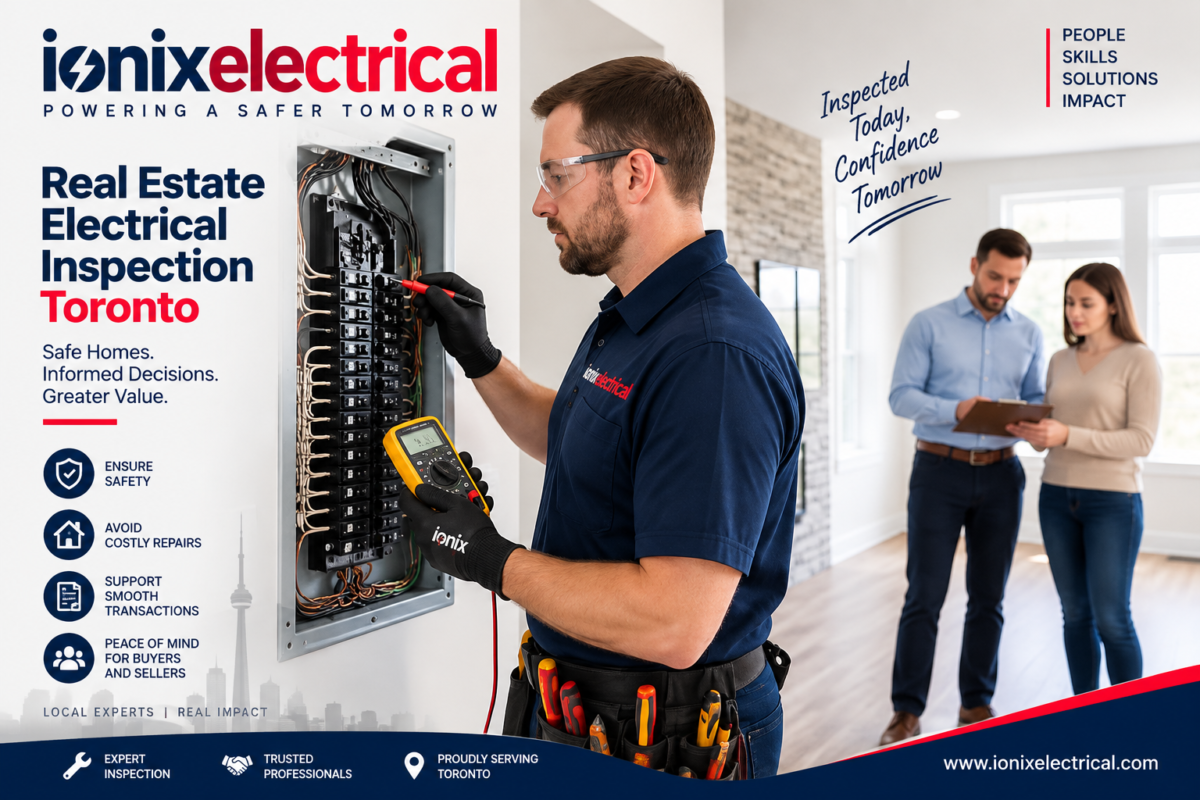
Real Estate Electrical Inspection Toronto: Friendly Guide to Safety, Code Compliance, and What Buyers Should Know
August 28, 2026
Buying or selling a home in Toronto or the GTA? Don’t skip the electrical check. A real estate electrical inspection uncovers safety hazards, code issues, and hidden problems that might impact your offer, insurance, or move-in timeline. Hire a licensed electrician or specialized inspector to see what’s really going on with the wiring, panel, outlets, and safety devices before making any big decisions.
If you want clear answers and reliable follow-up work, Ionix Electrical’s licensed electricians handle everything—fixture swaps, panel upgrades, EV charger installs, smart-home systems, outdoor and recessed lighting, whole-home surge protection, generator hookups, smoke and CO detector installs, and commercial lighting. We serve Toronto and the entire Greater Toronto Area—Mississauga, Vaughan, Markham, Richmond Hill, Brampton, Scarborough, North York, Etobicoke, Ajax, Pickering, and more.
Let’s walk through what a Toronto real estate electrical inspection covers, common issues inspectors call out, how to get your place ready, what happens after the inspection, and how to pick a certified professional who won’t miss anything. You want to protect your investment, right? Here’s how.
What Is a Real Estate Electrical Inspection in Toronto?
A real estate electrical inspection checks the home’s electrical system for safety, code compliance, and whether things work as they should. The inspector (ideally a licensed electrician experienced with Ontario requirements) examines wiring, panels, outlets, fixtures, and safety devices to spot hazards or repairs you’ll need.
Purpose and Scope
The main goal? Find safety risks that affect what the home’s worth and how comfortable you’ll be living there. Inspectors look at wiring condition, grounding, breaker and fuse performance, and visible connections. They’ll test outlets and switches, check for overloaded circuits, and look at visible wiring in attics, basements, and garages.
You’ll get a written report listing hazards, code violations, and recommended repairs. This report helps you negotiate repairs or price changes. Licensed electricians might also suggest upgrades—like panel replacements for modern appliances or EV chargers—if your setup can’t handle today’s loads.
Key Stages of Inspection
First up is a visual walk-through of accessible areas. The inspector checks the service entrance, meter, main panel, subpanels, and visible branch circuits. They’ll confirm breaker labeling and look for rust, overheating, or sketchy wiring.
Then comes functional testing. Outlets, GFCIs, and smoke/CO detectors get checked. Lighting, switches, and big appliances get a spot check too. The inspector documents what they find and suggests fixes—maybe it’s time to replace worn outlets, upgrade your panel, install surge protection, or add a circuit for EV charging.
Applicable Local Codes
Toronto and the GTA follow the Ontario Electrical Safety Code (based on the Canadian Electrical Code with Ontario amendments), administered by the Electrical Safety Authority (ESA). Inspectors check everything against these rules—grounding, wire sizing, breaker protection, and required safety devices. Older homes often need updates, especially for grounding and GFCI/AFCI protection in kitchens, baths, garages, and outside outlets.
Most significant electrical work requires an ESA notification (permit) and inspection. If code violations pop up, you’ll need a licensed electrical contractor to pull the notification and complete code-compliant repairs. Ionix Electrical’s licensed electricians (ECRA/ESA Licence #7017371) can handle permits, ESA processes, and code-compliant repairs throughout Toronto and the GTA. We handle everything from simple fixture swaps to panel upgrades, EV charging, smart home systems, outdoor lighting, surge protection, and emergency repairs—residential or commercial.
Why Electrical Inspections Matter When Buying Property
Knowing the state of the wiring, panels, and devices means you can dodge safety risks, surprise repair bills, and code problems that drag out closing. A good inspection tells you what’s urgent, what can wait, and what upgrades will keep your investment safe.
Identifying Safety Hazards
An inspection uncovers hidden dangers—frayed wiring, overloaded circuits, outdated panels that can shock or start fires. Inspectors check outlets, switches, and junction boxes for loose connections and heat damage. They also test GFCIs and AFCIs in bathrooms, kitchens, and bedrooms—places where you really need protection.
You’ll find out if there’s knob-and-tube or aluminum wiring that needs replacing. The inspector notes any burned insulation, scorched breakers, or bad splices. You get to request repairs or price drops before you buy.
Ionix Electrical’s licensed electricians handle these checks and fix hazards fast. We install smoke and CO detectors, whole-home surge protectors, and generator hookups to boost safety.
Preventing Costly Repairs
Inspections catch things that get expensive if ignored—like a failing service panel, bad grounding, or damaged branch circuits. If your panel’s worn out or can’t handle the load, you’ll know early and can budget for upgrades instead of scrambling after a blackout.
Inspectors spot DIY mistakes, wires that are too small, and circuits overloaded with modern appliances or EV chargers. That saves you from breaker trips, fried appliances, and emergency calls.
Ionix Electrical does panel upgrades, wiring fixes, outlet repairs, EV charger installs, and surge protection. We serve Toronto and the GTA and can plan upgrades in phases to spread out costs and avoid too much disruption.
Ensuring Code Compliance
An inspection checks if the property meets current electrical codes—especially where safety and resale are concerned. Inspectors verify grounding, bonding, breaker types, and safety devices. Noncompliant or unpermitted work can create insurance issues, stall closing, or force you to fix things after you move in.
You’ll get a list of code violations and needed fixes—like missing GFCIs, improper AFCI protection, bad smoke/CO detector placement, or unpermitted panel work. This helps you negotiate repairs, ask the seller to handle fixes, or set aside money for corrections. ESA Certificates of Acceptance are especially valuable for insurance and resale.
Our team at Ionix Electrical knows the Ontario Electrical Safety Code and handles permits, ESA notifications, inspections, and repairs. We offer residential and commercial upgrades, smart-home wiring, recessed and outdoor lighting, troubleshooting, and emergency support across Toronto and the GTA.
Process of a Toronto Real Estate Electrical Inspection
Curious what inspectors actually check? Here’s the rundown—what they look for, how they test things, and what repairs or upgrades usually follow. The focus is always safety, code compliance, and notes you can use for repairs or negotiations.
Initial Walk-Through
Inspectors start with a visual tour. They look for obvious issues: damaged outlets, loose cover plates, exposed wires, overloaded power strips, and water near electrical stuff. If you know of flickering lights or dead outlets, mention them.
They also check the main service entrance and meter outside. The inspector notes the service size (amps), checks the weatherhead or underground service, and sees if the grounding looks right. Photos and a list of safety concerns get made on site.
Expect a chat about smoke and CO detectors. The inspector confirms they’re there and working—since working detectors are key and often part of the sale terms.
Inspection of Electrical Panels
Inspectors open each panel and check breakers, fuses, and wiring. They look for double-tapped breakers, rust, burned insulation, and panel labeling. If your panel is original or too small (common 60A or 100A services in older GTA homes), the inspector notes capacity issues and might recommend a panel upgrade.
Grounding and bonding get extra attention. Inspectors check grounding conductors and bonding to water pipes or ground rods. Loose neutrals or bad bonding can cause weird problems and safety risks.
If they find obsolete equipment, they flag it for replacement. You get notes on what needs upgrading, how urgent it is, and whether you should call an electrician before closing.
Detailed Outlet and Wiring Evaluation
After the panel check, the inspector tests outlets and switches. They use testers to check wiring, grounding, and GFCI/AFCI protection. Expect checks in kitchens, baths, garages, and outside for GFCIs.
Wiring methods get a look, too. The inspector checks for knob-and-tube, aluminum circuits, and DIY splices. They’ll note old insulation, bad conduit use, or overloaded circuits that need fixing.
You’ll see a list of repairs and safety upgrades—maybe adding AFCI/GFCI protection, replacing damaged outlets, or adding circuits for heavy loads. Ionix Electrical’s licensed electricians can handle these jobs across Toronto and the GTA, from simple outlet fixes to full upgrades and emergency calls.
Common Electrical Issues Found in Toronto and GTA Homes
You’ll often run into old wiring, overloaded panels, and missing safety devices in local homes—especially pre-1980s properties. These issues boost fire risk, cause power interruptions, and make it tough to add new appliances or smart gear.
Outdated Wiring
Homes built before the 1950s in Toronto sometimes still have knob-and-tube wiring. Cloth insulation frays with age, exposing wires, and there’s typically no grounding. Aluminum wiring (common in the mid-1960s to mid-1970s) can loosen at connections and overheat unless properly remediated. Either way, you’re risking arcing and fire.
Look out for flickering lights, discolored outlets, or a tingling feeling from appliances. Planning an electrical upgrade—an EV charger, smart home tech, or an addition? Old wiring often needs replacing to meet code and handle modern loads. Ionix Electrical’s licensed electricians can inspect, show you what they find, and safely rewire or repair as needed.
Panel Capacity Concerns
A lot of GTA homes still have 60-amp or undersized 100-amp panels from decades ago. These panels can’t keep up if you add central AC, an EV charger, or a bunch of high-draw appliances. Signs include frequent breaker trips, warm panels, or lights dimming when big appliances kick on.
Panel issues also show up as rusted bus bars, double-tapped breakers, or breakers that are just too old. Upgrading to a properly sized panel (often 200A) and the right breaker setup improves safety and lets you add circuits for EV chargers, surge protection, or a new HVAC. Ionix Electrical handles panel evaluations, upgrades, and installs for homes and businesses across the GTA.
Improper GFCI or AFCI Protection
Many older homes are missing GFCI outlets in bathrooms, kitchens, garages, and outside. They might not have AFCI protection in bedrooms and living areas, either. Without GFCIs, you risk shocks near water. Without AFCIs, you miss arc-fault detection that could prevent a fire.
No test/reset buttons on wet-area outlets? No AFCI breakers where required? You probably need upgrades. Installing GFCI and AFCI devices brings your home up to modern safety standards and protects everyone inside. Our team installs and tests these, integrates them with your circuits, and helps you figure out the best spots for protection in your Toronto-area home.
Choosing a Certified Electrical Inspector or Contractor in Toronto
Pick someone with the right licences, who can actually explain findings in plain English, and hands you a written report you’ll need for repairs or real estate deals. Local experience matters, so does honest pricing, and it’s a plus if they’re willing to coordinate with your contractor or agent.
What Qualifications to Look For
Make sure the professional is a licensed electrical contractor (LEC) registered with the ESA (ECRA/ESA licence). Ask for the licence number and verify it. Years of hands-on work with panels, wiring, and modern systems? Even better.
Pick someone who carries proper liability insurance. A good inspector or electrician documents defects with photos and code references, and should spell out timelines for recommended fixes.
Ionix Electrical’s licensed electricians (ECRA/ESA Licence #7017371) cover everything from panel upgrades and surge protectors to EV chargers and smart systems. We’ve worked all over Toronto and the GTA, so we know the quirks of regional wiring and building styles in older neighbourhoods.
Questions to Ask
Start with the basics: licence number and insurance. Then, ask how many inspections or assessments they do and how often they see homes like yours. Do they check the service panel, grounding, GFCIs/AFCIs, smoke and CO detectors, and exterior wiring? Don’t assume—ask.
Request a sample report so you know what you’re getting. Do they include photos, severity ratings, or repair priorities? How long does an assessment usually take? Will they walk you through issues in person?
If you need repairs, ask if they’ll coordinate with your real estate timeline and handle ESA notifications. Got smart-home or EV gear? Ask about their experience with automated lighting, recessed fixtures, and EV charging.
Understanding Inspection Reports
A solid report lists defects, safety risks, and recommended repairs by priority. You want clear labels like “Safety Hazard,” “Repair Needed,” or “Maintenance.” Photos with captions help you see exactly what’s wrong and where.
Look for references to the Ontario Electrical Safety Code for big stuff—panel issues, improper wiring, missing AFCIs or GFCIs. Cost estimates are helpful; your electrician can give you accurate numbers.
Make sure you get the report as a PDF so you can share it with your agent, buyer, or lawyer. If you need repairs fast, pick a team that can pull ESA notifications and return for re-inspection. Ionix Electrical offers follow-ups and full-service repairs, from swapping out fixtures to major upgrades and emergency support across Toronto and the GTA.
Preparing Your Toronto Property for Inspection
Clear up wiring, panels, and access points ahead of time. Gather your permits and jot down any recent electrical work so the inspector can get in and out without delays.
Checklist for Homeowners
- Gather papers: Collect ESA Certificates of Acceptance, electrician invoices, and appliance manuals in one place.
- Label circuits: Mark breakers for kitchen, HVAC, ovens, EV charger, and big appliances.
- Test devices: Swap out dead smoke/CO batteries and test alarms. Try GFCI outlets in bathrooms, kitchen, and outside.
- Fix visible hazards: Secure frayed cords, replace busted switch plates, and tighten loose outlets. Don’t mess with the panel yourself.
- List unusual items: Note pools, hot tubs, EV chargers, smart systems, or surge protectors so the inspector checks them.
- Clear the area: Move stuff away from the panel and meters—aim for proper clearance. It speeds things up and keeps you in code.
Ensuring Access to Key Areas
Unlock or clear paths to the panel, meter, attic, garage, crawlspace, and HVAC gear. If your panel’s behind a locked door or gate, leave a key or code handy.
Make sure attic lights work, or just bring a flashlight and ladder. Clear out storage under stairs or in crawlspaces. If you have an EV charging outlet or wall charger, make it reachable and show the inspector the breaker.
Label locked rooms or mechanical closets and note them on your list. If you’ve got pets, secure them so the inspector can get around safely.
What to Expect on Inspection Day
The inspector will look at wiring, panels, breakers, outlets, and grounding. They’ll test GFCIs, AFCIs, smoke and CO detectors, and check for overloaded circuits and bad splices.
Expect questions about recent work, permits, or upgrades—things like panel replacements, recessed lighting, smart lighting, or generator hookups. Be ready to point out surge protectors, outdoor lighting, and any specialty installs.
If the inspector finds issues, they’ll list defects and fixes needed. Ionix Electrical’s licensed electricians can handle repairs, upgrades, smart home work, EV charging installs, troubleshooting, and emergencies across Toronto and the GTA. We cover everything from simple fixture swaps to full panel upgrades.
Post-Inspection Steps for Buyers and Sellers
Focus on the report’s defects, costs, and deadlines. Decide what needs fixing now, what can wait, and what’s a safety or code issue.
Interpreting the Results
Go through the report line by line. Look for “hazard,” “safety,” or “code” labels—stuff like overloaded panels, missing grounds, or sketchy knob-and-tube wiring. Pay attention to the recommended actions and any photos or circuit IDs showing where the problems are.
Turn technical terms into a to-do list. If the report mentions a “shared neutral” or “double-tapped breaker,” get a licensed electrician’s estimate for repair. Keep a list of repairs with estimated prices and timelines so you can compare bids and know what has to be done before closing.
Negotiating Repairs
Bring documented estimates when you ask the seller for repairs or credits. Show itemized quotes for each safety issue—don’t just lump everything together. Be specific: ask for a new panel, GFCI replacements, or whole-home surge protection with clear ESA permit and inspection requirements.
Figure out who pays and when the work has to be finished. For expensive items, ask for escrow holdbacks or seller-paid credits. For minor stuff, require receipts and ESA Certificates of Acceptance. If you’re selling, respond with bids from licensed electricians and a schedule showing the work will pass final inspection.
Finalizing the Real Estate Transaction
Before closing, double-check that all agreed repairs are done and have the proper ESA documentation. Get signed permits/notifications, final Certificates of Acceptance, and receipts from the licensed electricians who did the work. Keep copies for your closing agent and your own records.
Hire a licensed electrician for a final walk-through if power-related items are still pending. Ionix Electrical’s team can handle final checks, install upgrades like EV chargers or smart systems, and provide the paperwork you need. We serve Toronto, Mississauga, Vaughan, Markham, Richmond Hill, Brampton, Scarborough, North York, Etobicoke, and the rest of the GTA.
Cost Factors and Scheduling Electrical Inspections
Inspection costs depend on the scope, property age, and what needs checking. Here’s what you can expect and how to book an inspection in Toronto without a headache.
Typical Price Range
Basic residential electrical assessments in the Toronto area typically start in the low hundreds of dollars and can range higher depending on home size, complexity, and whether a detailed written report with photos is included. Full evaluations that include load considerations, older wiring types, or real-estate-ready documentation cost more. Commercial properties are priced higher based on size and systems.
Always get a written estimate that spells out what’s included and any optional tests.
Factors Affecting Cost
Size matters: more rooms, circuits, and panels take longer. Older homes usually need more time since old wiring and components need extra checks. Hard-to-reach panels or attics add labour.
Scope and tools change the price. Detailed code reviews, infrared checks, or load testing bump up fees. If you need repairs or ESA notifications after, that’s extra—especially if you hire the same company for fixes. Emergency or same-day slots cost more. Proper licensing and insurance boost reliability.
How to Book an Inspection in Toronto
Call or book online with a licensed electrical contractor serving Toronto and the GTA. When reaching out to Ionix Electrical, have your address, property type, building age, and any specific concerns ready—like flickering lights or panel issues. Ask if the assessment includes a written report and repair estimates.
Double-check the ECRA/ESA licence number and insurance. If you’re in a hurry for a sale or safety issue, ask about available slots. Request a clear fee breakdown and see if you can bundle services—maybe combine an assessment with EV charger install, smart wiring, or surge protection to cut down on repeat visits. Ionix Electrical’s team covers everything from basic fixtures to major upgrades and emergencies across Toronto and the GTA.
Electrical Safety Tips for New Homeowners in Toronto
Moving into a new place? Start with a walk-through of outlets, switches, and the breaker panel. Watch for damaged outlets, loose faceplates, flickering lights, or anything that smells burnt—those are red flags and usually mean you need a pro.
Label your circuits so you know which breaker does what. Test GFCIs in the kitchen, bathrooms, garage, and outside. Keep a small outlet tester and flashlight on hand for quick checks.
Install working smoke and CO detectors on every floor and near bedrooms. Swap batteries yearly and test alarms every month. A whole-home surge protector can protect electronics from storms and power spikes—honestly, it’s worth it in the GTA.
Don’t overdo it with extension cords or daisy-chain them together. Use power strips with surge protection for computers and TVs. If you’re tripping breakers a lot or outlets feel warm, get repairs done.
Ionix Electrical’s licensed electricians handle everything in Toronto and the GTA, from automated lighting and smart systems to EV charging, panel upgrades, generator hookups, and surge protectors.
Keep outdoor fixtures and landscape lighting in shape and rated for wet locations (important with Canadian winters and freeze-thaw cycles). For smart home installs, ceiling fans, recessed lights, TV mounting, or commercial lighting, hire a licensed pro to keep things safe and up to the Ontario Electrical Safety Code.
For emergencies or big upgrades, pick a team that does both residential and commercial work—anything from a quick fixture swap to a full electrical overhaul and safety inspection.
Frequently Asked Questions
Here’s where you’ll find answers about cost, common issues, what inspectors check, and what to do if problems pop up.
How much should I expect to pay for an electrical inspection when buying a home?
A basic home electrical assessment in the Toronto/GTA area typically falls in a range starting around the low-to-mid hundreds of dollars, depending on home size, panel complexity, and the depth of the report. More thorough evaluations or those tied to older wiring types cost more. Proper licensed assessments provide real value. Ionix Electrical offers clear pricing and can bundle with repair estimates.
What do home inspectors or electricians typically look for when examining the electrical system?
They dig into the main service panel, breakers, and grounding. They check outlets, switches, visible wiring, and look for GFCI/AFCI protection in kitchens, bathrooms, garages, and outside. They note overloaded circuits, improper wiring practices, and signs of overheating. In commercial buildings, they also check lighting systems, emergency power, and panel labeling.
What are some common electrical issues found during home inspections in Toronto?
It’s not unusual to spot old or undersized panels, double-tapped breakers, missing grounding, knob-and-tube, or aluminum wiring. Other common findings include non-GFCI outlets where required, flickering lights from loose connections, and overloaded circuits. Most of these problems are fixable without tearing up the whole house.
Can I get an electrical inspection for my property at no cost?
Free thorough inspections are rare. Sometimes a seller or agent covers a basic look, but a proper assessment with a written report usually involves a fee. Free estimates for upgrades are more common. Ionix Electrical provides transparent quotes so you can decide what level of assessment makes sense.
What are the most important things to watch out for during an electrical inspection?
Keep an eye out for overheating—burn marks, melted insulation, or a hot panel cover. Missing GFCI/AFCI protection in key areas and exposed or damaged wiring are other red flags. Check the panel’s age and capacity, look for loose outlets, and confirm safety devices like smoke and CO detectors, surge protection, and proper grounding are present.
What should I do if significant electrical problems are found during the inspection?
Start with the safety issues—faulty wiring, sketchy connections, or an overloaded panel. Call a licensed electrical contractor to assess and provide a real-world estimate and timeline. You can ask the seller to fix things before closing or negotiate credits. Our licensed electricians tackle everything from swapping a fixture to full panel upgrades, EV charger installs, smart home setups, outdoor lighting, surge protection, generator hookups, and emergency repairs across Toronto and the GTA. If you want licensed, reliable help for your home or business, Ionix Electrical has your back. Call (647) 783-2210 or email info@ionixelectrical.com.